Football Game Day Sublimation Graphics for Crafts
First Impression: Energetic, Playful, and Unapologetically Bold
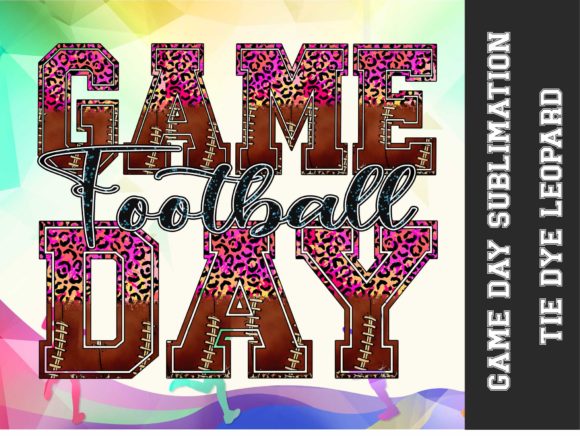
When I opened Football Game Day Sublimation, my immediate reaction wasn’t “cute” or “trendy”—it was “this has presence.” The tie-dye leopard pattern pulses with movement and attitude. It’s not subtle—and it shouldn’t be. This graphic design asset lands squarely in the sweet spot between sporty enthusiasm and creative flair, making it ideal for brands that want to signal fun, community, and spirited authenticity. For small business branding targeting fans, families, tailgaters, or youth leagues, it communicates energy without sacrificing visual polish. It leans into casual lifestyle branding—not luxury minimalism—but does so with intentional contrast, balanced saturation, and a confident rhythm.
A Real Campaign Fit: Launching a Limited-Edition Fan Bundle
Last month, I helped a boutique apparel brand refresh its fall content kit for a “Game Day Glow-Up” digital product launch—think printable checklists, Canva templates for social posts, and Instagram Story kits. Football Game Day Sublimation became the unifying visual motif across banners, email headers, and Pinterest pins. Its transparent background PNG file resolution 300 dpi made resizing seamless—from mobile-first Instagram carousels to high-res blog graphics. Because it’s built for flexibility (not rigidity), it anchored the campaign without overwhelming supporting copy or product photography. That’s rare for a pattern-based graphic design asset: it supports, rather than competes.
Where It Strengthens Brand Communication
- Social media graphics: Adds instant visual hierarchy to otherwise flat promo posts—especially on Facebook ads and Pinterest where scroll-stopping texture matters.
- Printable design & content bundles: Works beautifully as a background layer behind bold typography in lead magnets or editorial layouts.
- Packaging accents & merchandise: Scales cleanly onto tote bags, stickers, and packaging inserts—ideal for craft sellers and digital product creators building themed collections.
- Editorial design & web design: When used sparingly—as a header accent or section divider—it elevates blog graphics and landing pages without compromising readability.
- Digital ads & email banners: Delivers stronger first impression and emotional connection than generic stock patterns, especially for seasonal offers tied to football culture.
Where It Builds Audience Trust—Without Saying a Word
Consistency is credibility. When Football Game Day Sublimation appears across multiple touchpoints—a Canva template, a product label mockup, and an Instagram Story—it quietly reinforces brand recognition. Audiences don’t need to read your mission statement to sense cohesion. That’s why this graphic design asset shines in commercial design contexts: it’s versatile enough for rapid iteration, yet distinctive enough to become part of a visual shorthand. For online coaches launching football-themed challenges or creative entrepreneurs selling craft kits, it signals professionalism through execution—not just aesthetics.
Best Used As…
- A hero graphic overlay for campaign landing pages
- The foundational texture in branded Canva templates
- An accent element in packaging design (e.g., sticker borders or insert backgrounds)
- A decorative brand element inside editorial design layouts
- A dynamic backdrop for social media graphics—especially Stories and Reels thumbnails
Used Carefully In…
This isn’t a one-size-fits-all solution. Avoid placing Football Game Day Sublimation directly behind dense text blocks or in formal corporate branding where clarity trumps character. It can overwhelm low-contrast backgrounds or compete with script fonts if not carefully balanced. On small mobile graphics, test how the pattern reads at thumbnail size—some detail may blur. And while it pairs brilliantly with bold sans serif and playful display fonts, it can visually clash with delicate serifs or overly refined handwritten fonts unless intentionally layered with ample white space.
Practical Brand Designer Notes You’ll Actually Use
Before finalizing any campaign, I always run these checks: Does Football Game Day Sublimation harmonize with your existing brand color palette—or does it demand a slight shift in secondary tones? How does it hold up in black and white? (Spoiler: the contrast holds, but texture softens.) Always place it inside real campaign mockups—not just isolated previews—to assess spacing and balance. Preview on mobile screens: does the energy translate, or does it feel chaotic? Compare it against competitor visuals: does it stand out *for the right reasons*? And critically—confirm commercial licensing. This is a digital product meant for business use, but verify permissions before using in paid campaigns, client deliverables, or physical merchandise.
Why It Fits Creative Marketplaces—and Your Workflow
In today’s crowded creative marketplace, designers and small business owners need assets that are both expressive and executable. Football Game Day Sublimation delivers exactly that: a modern design rooted in cultural relevance, engineered for real-world marketing use. Whether you’re curating a design bundle, building a seasonal content kit, or designing a limited-run merch line, it bridges the gap between inspiration and implementation. It’s not just clipart—it’s a strategic visual tool. And because it’s delivered as a high-resolution PNG with transparent background, it integrates smoothly into tools like Canva, Adobe Express, and Figma—no SVG conversion headaches, no pixelation surprises.
The Bottom Line for Content Creators and Small Business Branding
If your audience celebrates spirit, seasonality, and shared experience—Football Game Day Sublimation isn’t just decoration. It’s a tone-setter, a consistency anchor, and a subtle trust-builder. It works hardest when treated as a supporting player—not the star—allowing your messaging, products, and personality to shine. For marketers, bloggers, and creative entrepreneurs building memorable, scalable visual systems, this graphic design asset earns its place in the toolkit—not because it’s trendy, but because it’s useful.