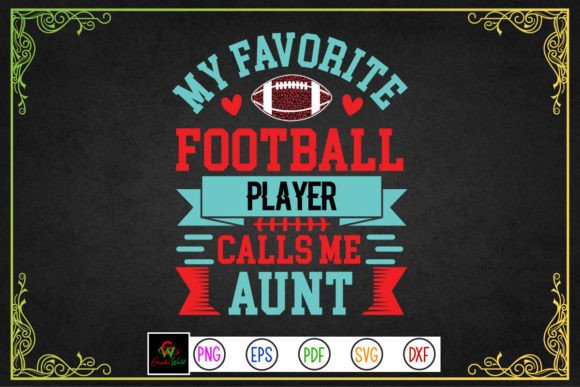
My Favorite Football Player Calls Me Aun
A Designer’s First Look: Charm with a Niche Vibe
When I opened My Favorite Football Player Calls Me Aun, my first thought wasn’t “cute” or “trendy”—it was *“this feels like a real conversation.”* The typography leans vintage, slightly relaxed, with subtle weight variation and soft edges—not overly distressed, but warm. It reads as handwritten charm rather than digital perfection, which works beautifully for handmade embroidery. There’s no football iconography, no jersey numbers, no mascots—just confident, affectionate text. That makes it unexpectedly versatile: less “fan gear,” more “family inside joke.” I immediately pictured it stitched on a cozy oatmeal-colored sweatshirt for a toddler’s birthday gift—or on a linen tea towel gifted to a new aunt at a baby shower.
Where It Shines: Real Projects, Real Stitching
I tested My Favorite Football Player Calls Me Aun across three real-world items: a medium-weight cotton tote bag, a brushed cotton baby onesie, and a structured twill cap. On the tote, the design held up cleanly with a standard cutaway stabilizer—no puckering, no thread nesting. The letterforms have generous spacing and moderate stroke width, so fill stitches laid down smoothly without overloading the fabric. On the onesie, I used tear-away + light iron-on and kept stitch density moderate; the result felt soft, legible, and genuinely handmade—not stiff or mass-produced. Even on the curved front panel of the cap, the layout’s horizontal simplicity made hooping straightforward and minimized distortion.
This isn’t a design that begs for embellishment—it stands on its own. As a machine embroidery design, it relies mostly on satin stitch outlines and clean fill stitch areas, not dense decorative accents. That means fewer jump stitches, lower risk of thread breaks, and faster run times. For Etsy sellers or small shop owners building a line of personalized gifts, My Favorite Football Player Calls Me Aun is low-friction inventory: easy to mock up digitally, quick to stitch, and emotionally resonant enough to justify a premium price point on custom apparel or nursery decor.
Where to Pause—and Why
That said, this design isn’t universally forgiving. On thin or highly stretchy fabrics (like lightweight jersey or ribbed knit tees), the letterforms can lose definition if stabilizer choice or tension isn’t dialed in. I recommend testing on scrap first—and using a light cutaway or hybrid stabilizer, not just tear-away. Also, avoid placing it on textured surfaces like heavy terry cloth or bouclé knits unless you’re willing to adjust stitch density manually. The lowercase “a” in “Aun” has a delicate curve; on dark fabric with light thread, that detail can soften visually. Always check black-and-white mockups before finalizing color combos.
It’s also not ideal for tiny hoops (under 4”). The full phrase needs breathing room—roughly 5–6 inches wide for optimal clarity. If you’re planning embroidered patches or cap fronts, consider cropping or simplifying to “Aunt” alone—but only after reviewing the vector file structure. Since this is a digital embroidery file listed under Graphics, confirm whether the SVG/vector version includes editable layers or grouped elements. That flexibility matters when adapting for different hoop sizes or product types like pillow covers or aprons.
Stitching Clarity = Customer Trust
In my experience, customers don’t buy embroidery—they buy *recognition*, *warmth*, and *intention*. My Favorite Football Player Calls Me Aun delivers that instantly. It doesn’t shout. It smiles. That tone translates directly into perceived value: buyers feel seen, not marketed to. When stitched cleanly on a well-chosen fabric—say, a heavyweight organic cotton sweatshirt—the design reads as thoughtful, not generic. That builds trust, especially for craft business owners selling on Etsy or at local markets. It also photographs well in natural light, which boosts engagement on social media and printable mockups.
Practical Notes Every Embroiderer Should Check
- Test first: Run a sample on fabric matching your final project’s weight and stretch.
- Review thread colors: This design lives or dies by contrast—light thread on dark fabric needs slightly heavier satin stitch coverage; dark on light benefits from crisp edge definition.
- Confirm hoop size compatibility: The full phrase likely requires at least a 5x7 hoop. Don’t assume it fits smaller commercial hoops without checking the actual embroidery file dimensions.
- Inspect corners and curves: Zoom in on the vector file—look for anchor points that might create jagged stitching on tight turns.
- Verify licensing: Since this is a digital embroidery file sold as a Crafts/Graphics asset, double-check the seller’s terms before using it commercially—especially if you plan to sell finished products or bundle it into digital design assets.
- Use proper stabilizer: Medium-weight cutaway works best for most apparel; light tear-away suffices for stable linens like tea towels or pillow covers.
Final Thought: A Quiet Standout
My Favorite Football Player Calls Me Aun won’t dominate a craft fair table with flash—but it will linger in memory. It’s the kind of embroidered patch that gets pinned to a denim jacket and stays there for years. The kind of tote bag design that sparks a smile at the grocery store. For embroidery designers, Etsy sellers, and small shop owners who prioritize authenticity over algorithm-friendly trends, this is a quietly powerful addition to your design assets. It fits naturally into holiday embroidery, baby embroidery, and personalized gift lines—not because it’s loud, but because it’s true. Just remember: let the fabric, stabilizer, and thread do their part, and this design will do the rest.